
Microcopy should never be an afterthought. Although just a few words strung together at important junctions of a website or app, they play a big role in the customer UX. But before talking about microcopy, it’s important to understand what microcopy is—and what it is not.
First things first. What is microcopy?
Bobbie Wood and Patrick Stafford do a great job of defining microcopy in UX writing versus microcopy, where they define the roles of content strategy, UX writing and microcopy. They identify UX writing as “the customer-facing communication at every point in a long customer journey, not just the bits of UI text that accompany components.”
Microcopy is therefore a subset of UX copy. It is the very specific copy (sometimes called UI text) associated with website, product or app components that come at key points of the user experience. Think of the overall content strategy and the broad UX writing as the roadmap and messaging that lead you to these critical decision points.
Microcopy has a job to do. Actually several.
You may be reading this post to answer the question, “What exactly is the job of good microcopy?” Glad you asked.
It’s not just one job. Microcopy tackles several important jobs, sometimes more than one at a time. In a Shopify blog on this topic, Microcopy: Why Tiny Words Matter, Nick Babich identifies five ways microcopy can improve the design or user experience. These include:
- Alleviate the user’s concerns
- Help users along the way
- Set expectations
- Bring delight
- Boost engagement
As you can see, each of these tasks are important functions that good microcopy should accomplish. Each of these jobs help to promote a better user experience and propel the relationship forward.
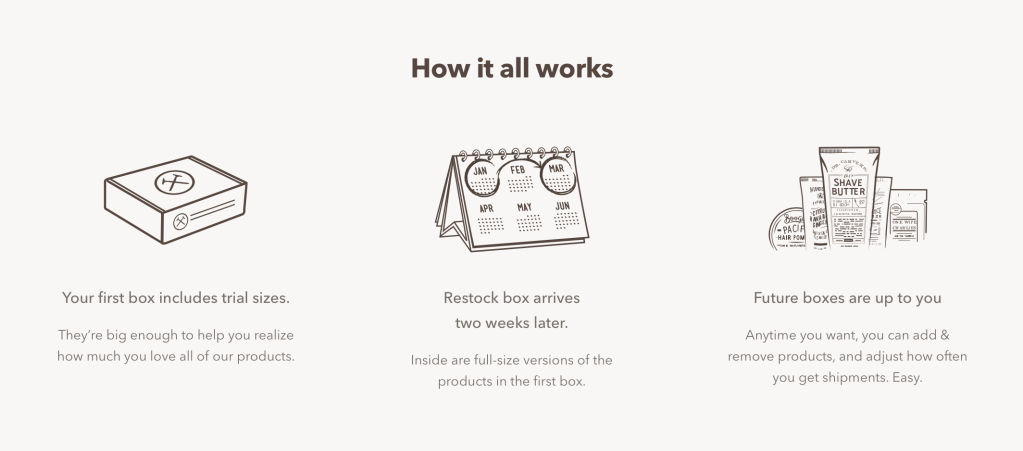
Of these five types of microcopy, my personal bias is that Help users along the way is the most important function of microcopy. Why? Because this is the messaging that does things like tell the user how to get started or what to do next. Quite simply, it guides the user as to what actions they should take—and why.
Push the buffalo off the cliff.
Coming from a background of direct response copywriting, I appreciate how microcopy is sometimes a direct CTA, or call-to-action. You’re telling the reader what to do, why they should do it and helping them feel good about it. All in as few words as possible.

One of my first mentors, Peter Harrison (of the former agency Smith Harrison Direct), would always tell me to make sure to push the buffalo off the cliff. This of course means, don’t kind of tell the user what to do, don’t get the user most of the way there, actually tell them what to do—and get them to do it! Although microcopy is short, it can still be strong and to the point.
Four more traits of good microcopy.
Now that we’ve reviewed the purpose of microcopy, let’s look at other common traits of well-written microcopy. In the Adobe blog post, The Four Cornerstones of Writing UX Microcopy, Sheena Lyonnais explains that if microcopy is a puzzle, the four corner pieces are:
- Brevity
- Context
- Action
- Authenticity
As far as Brevity, I’ve already mentioned how microcopy is short. In fact, sometimes it’s only a few words. The point is to provide just enough instruction, reassurance and motivation to get the job done.


Context goes back to setting expectations and helping users along the way. You’ll want to always answer questions like “Why am I here?” and “What does this mean?” And of course Action is about the CTA or “What should I do now?”
Authenticity speaks to microcopy that reassures the user or gives them information that is highly relevant to their current experience.
A final suggestion: Follow your brand voice.
It’s good to remember your brand voice and your overall content strategy for your site. Take time to make sure that microcopy stays within the brand. Microcopy can convey personality and even humor. Small efforts to maintain the voice will help make your customer journey more consistent.
 heymidge.com