Email frequency: How often should you hit their inbox?

ID-100178869

Stuart Miles/FreeDigitalPhotos.net

It’s a simple question: “How often should I send my marketing emails?”

Do a quick Internet search and you’ll see a lot of simple answers—once a week, once a month, etc.

Problem is, it’s not a simple answer. The first thing you need to ask is whether these emails are going to prospects, leads or customers. You’ll want a different communication strategy for each.

For prospects, you can certainly hit them multiple times over weeks or months. In fact, in this article, tEkk3 explains why frequency matters more than reach. In other words, mailing the same prospects multiple times can be more beneficial than mailing one larger mailing list once. But that doesn’t mean you can mail the same list forever. As pointed out in this MailChimp article, frequency and engagement are negatively correlated.

Now let’s think about leads. Someone has responded to you and provided their email and wants to know more. Perfect. Because this person has just asked you for more information, they are expecting it. In fact, you may have already informed them they you would be sending several follow-up emails at the time they opted in. So for this type of contact, communicating frequently in the short-term is okay, and expected.

There are actually many forms of lead nurturing, from a “drip campaign” to a “lifecycle campaign.” Marketo has a good Marketing Cheat Sheet about lead nurturing that goes into more detail on definitions, tracks and strategies. Take a look.

Depending on the type of product or service you offer, you may set up a lead nurturing track that communicates every few hours, days or weeks. You may have a 30-day nurture strategy, or a 180-day nurture strategy. Remember, with lead nurturing you can usually email frequently, especially in the first few days or weeks after they opt in.

Finally, you have your current customers. With this group, you may also have individual communication strategies for each segment of customers (new, active, win back, etc.). But overall, you’ll want to keep in contact with them as frequently as they would like you to. Once or twice a month may be appropriate.

Benchmark also has some good suggestions on how often to send email, as well as when to send it. Once every week or two is the most common. For high frequency emailers, your customers may be okay with two or three emails a week.

Remember: Keep your type of recipient in mind, build a contact strategy for each type, and then be consistent.

Building University of Phoenix leads through a student referral program.

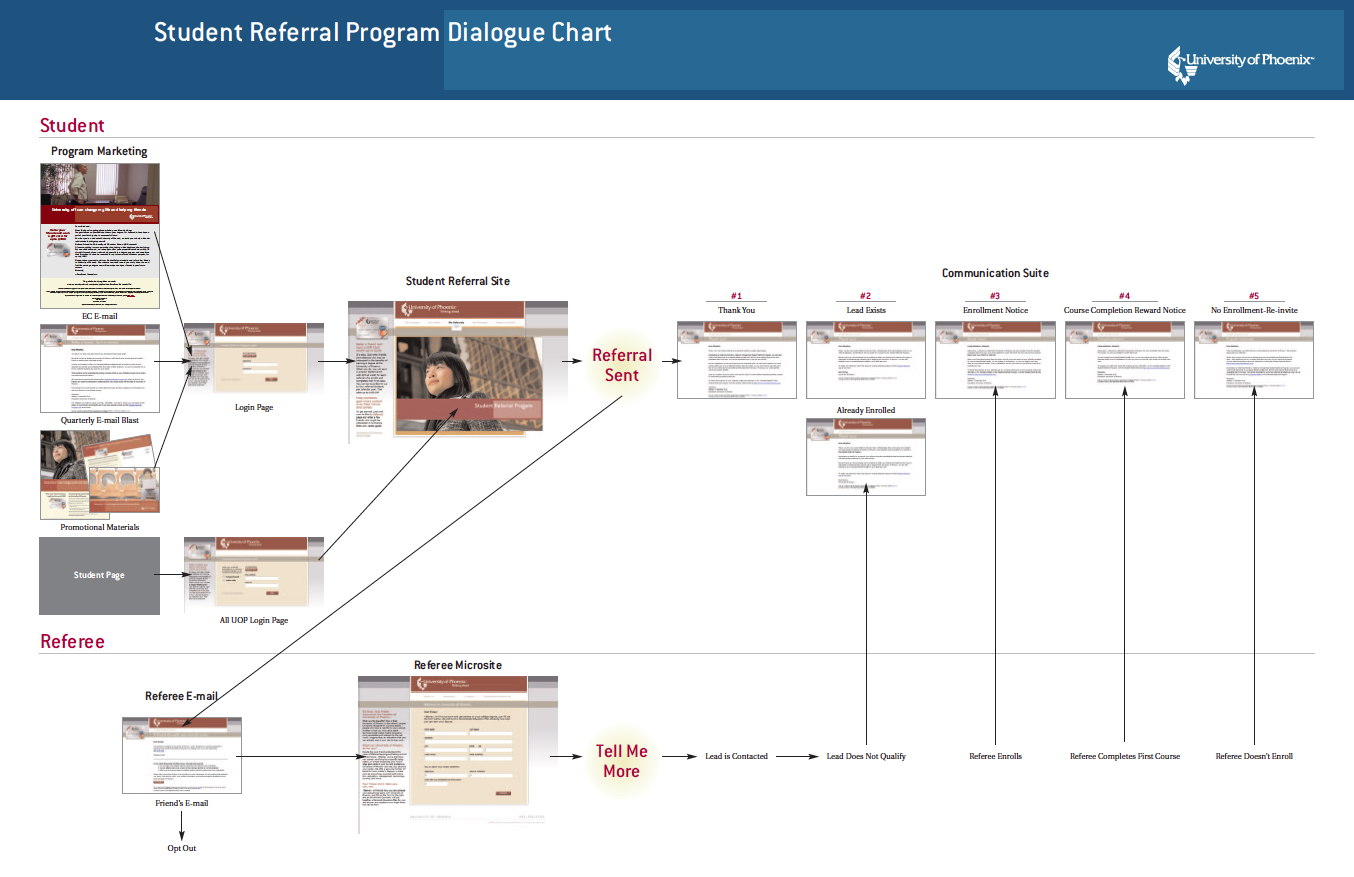
University of Phoenix was looking for a way to build more referrals from current students. To achieve this, Rastar Digital Marketing was hired to build a program that captured referrals, tracked referrals through to enrollment and registration, then rewarded students.

I was the communication strategist and lead copywriter on the project. I wrote content for a microsite in which students could become educated about the program, enroll in the program and then submit referrals. Once referrals were submitted, they went into the University of Phoenix database to ensure the lead did not already exist. Once validated, an email confirming the submission was sent back to the student.

Due to privacy rules, only a limited amount of information could be shared with the student as far as the progress of their referrals. Once students hit each milestone, a status email was triggered. The students were rewarded with pre-paid gift cards for each referral that enrolled, registered and began their first class.

The success of the project was amazing. To get the program off the ground, links to the new student referral site were placed on the University of Phoenix student site. Within days, thousands of referrals started to pour in. The number of student referrals submitted quickly moved it up the ladder to the lowest cost of new leads for the highest quality of lead. The program ran for three years until regulations surrounding student referrals changed.

University of Phoenix Referral Program

Email Jeff   

Helping CMOs listen to their data with Adobe analytics.

Reviewing and deciphering key customer analytics is a critical activity for just about every organization. Adobe wanted to generate awareness of its analytic services to CMOs.

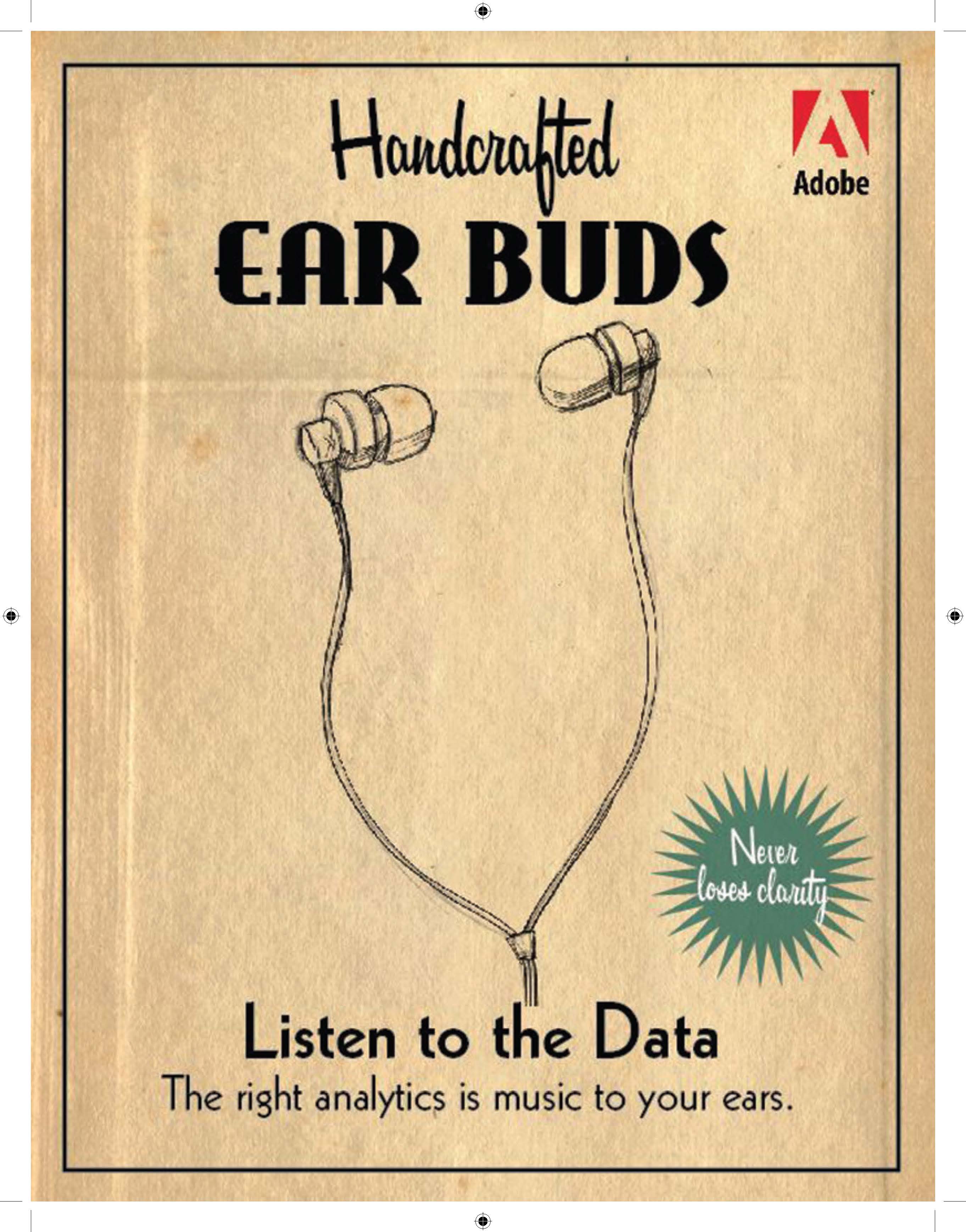
To do that, Adobe selected the Fritz & Andre agency to create an integrated campaign to CMOs promoting the Adobe Marketing Cloud. The agency invited me to join the project and create a number of campaign concepts that would also include a dimensional mailing and a product incentive. Ultimately, Adobe selected the theme of “Listen to What the Data Is Trying to Tell You.”

AdobeLayouts_Page_4

We wanted CEOs to know just how important it was to listen to and act on their data. The first touch to the targeted list of CMOs was an email teaser that let them know how they could request a small gift.

Adobe Listen Email

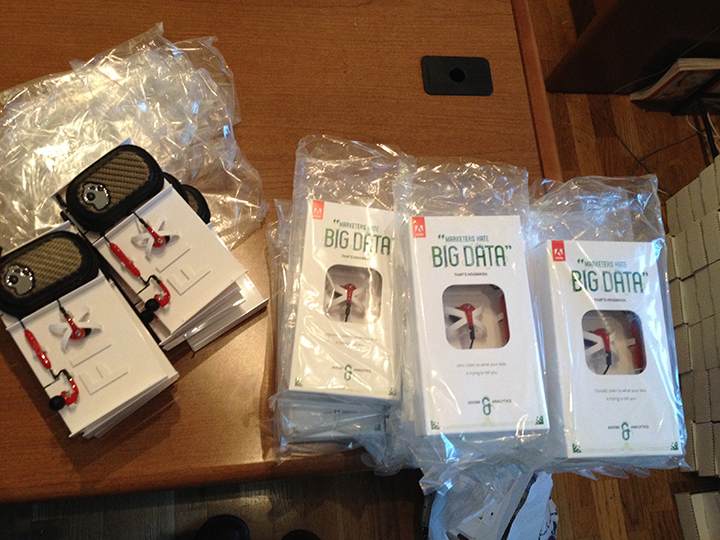
Responders to the email received a set of Skullcandy headphones in custom Adobe packaging which we created.

Adobe_SkullCandy

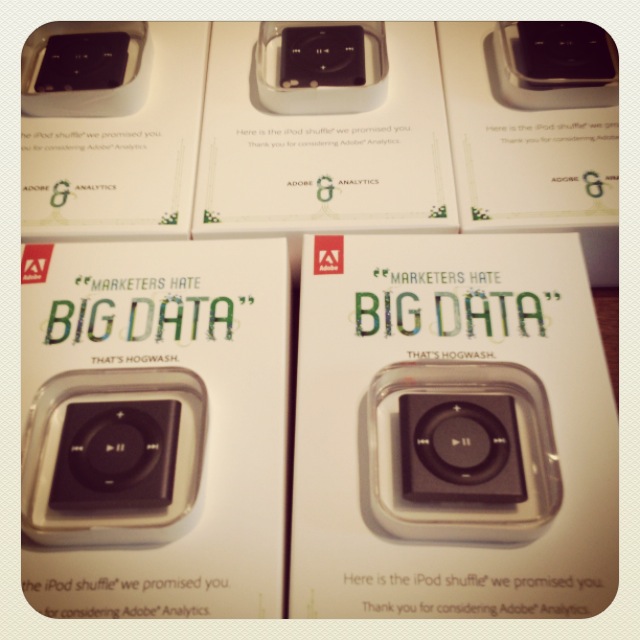
The third touch was an iPod digital music player in custom Adobe packaging. The campaign was successful in getting the message through loud and clear, with a significant number of recipients requesting appointments and learning more about Adobe Marketing Cloud.

Adobe_Skullcandy Box

Email Jeff   

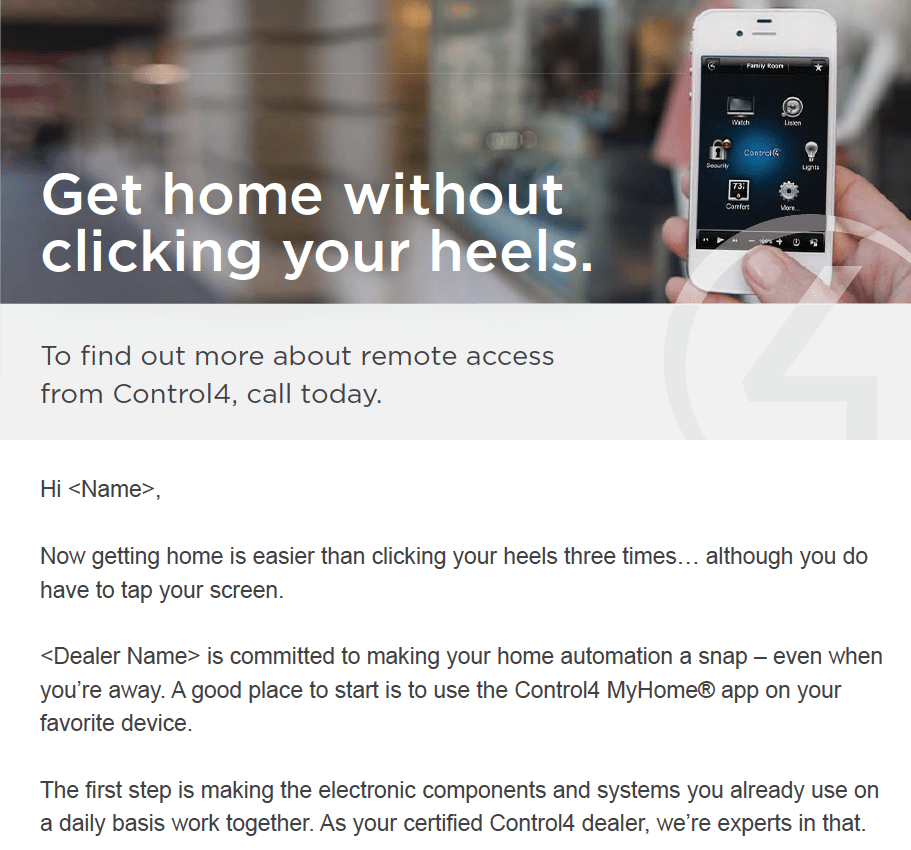
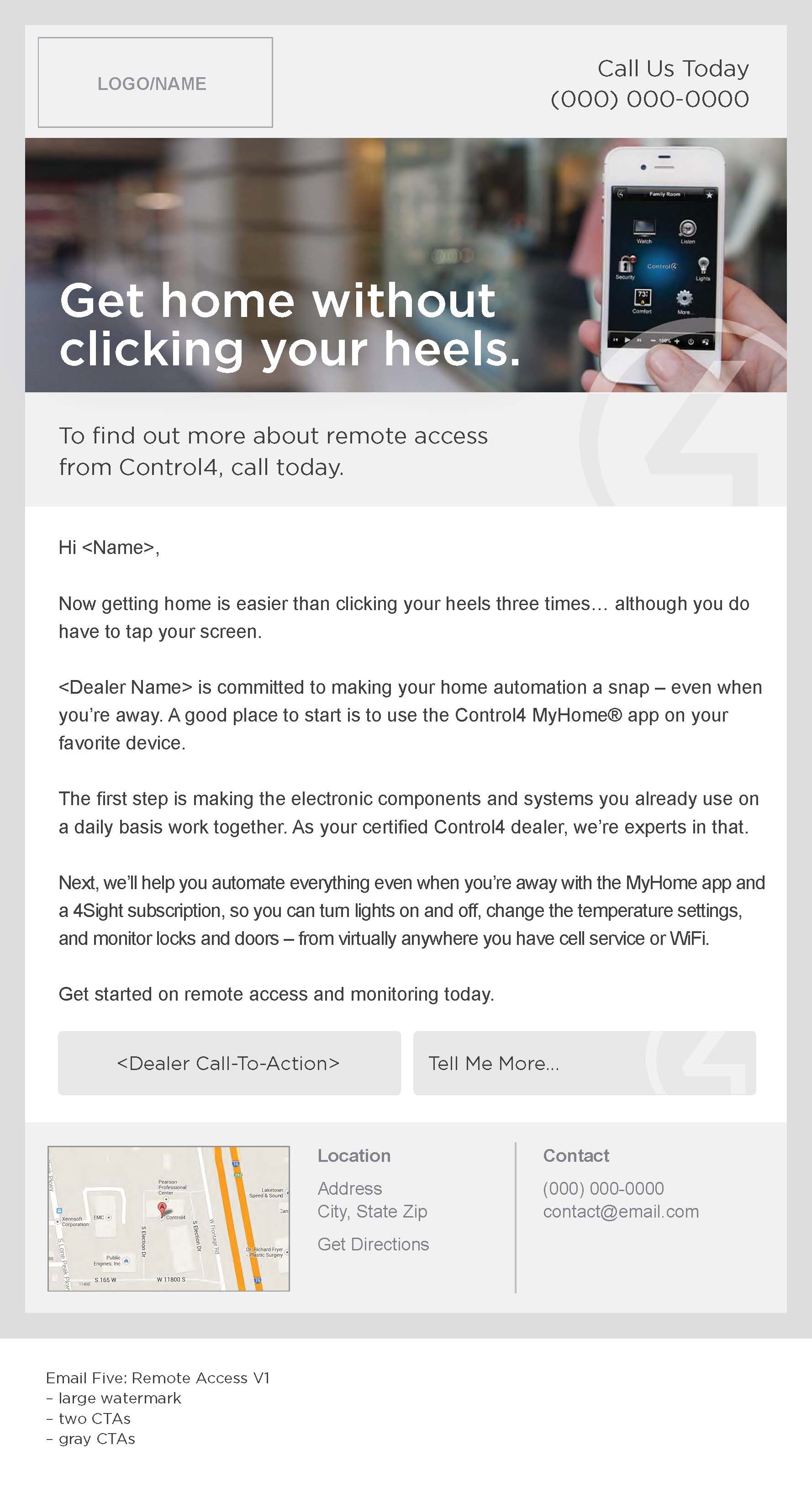
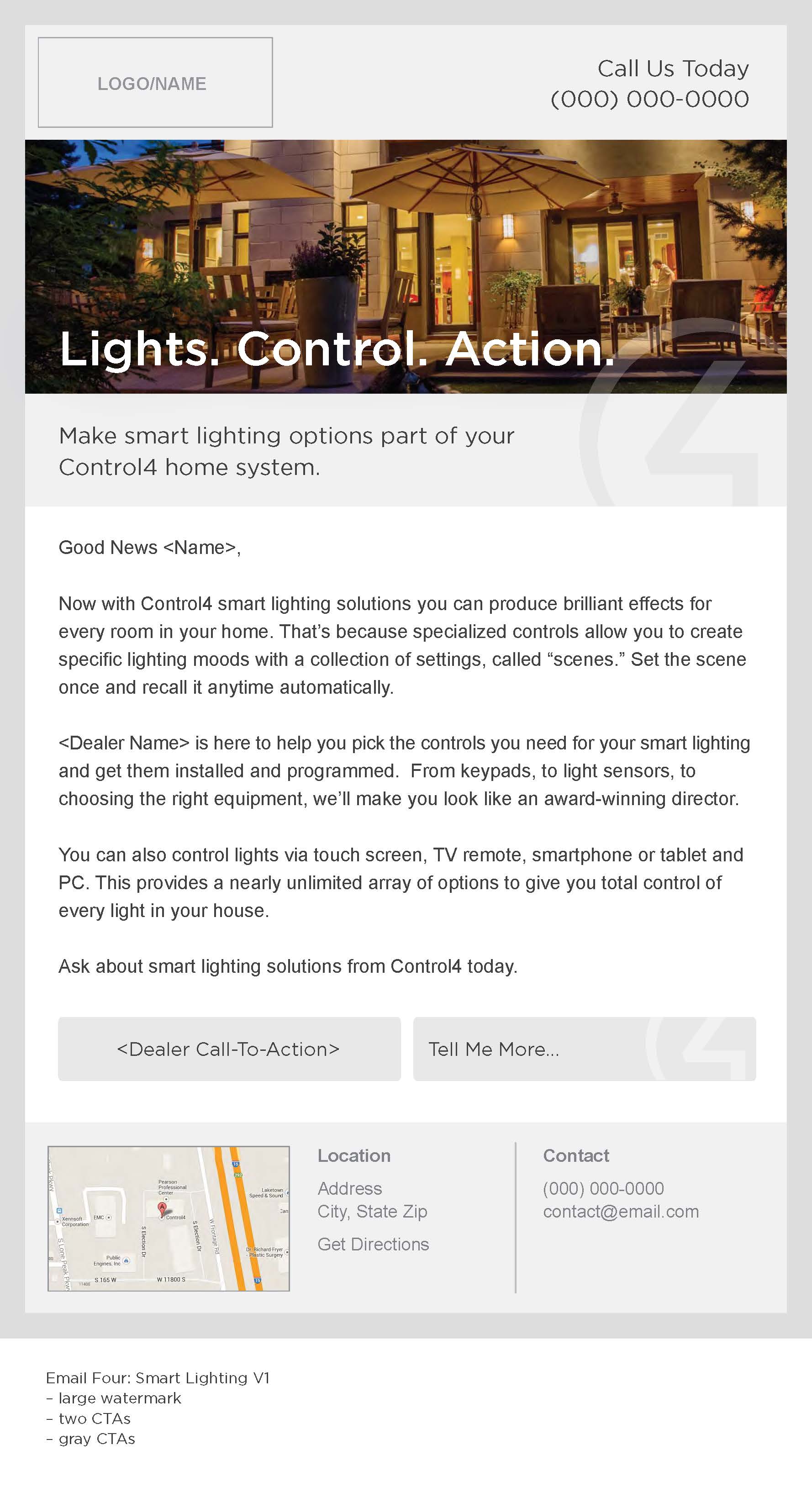
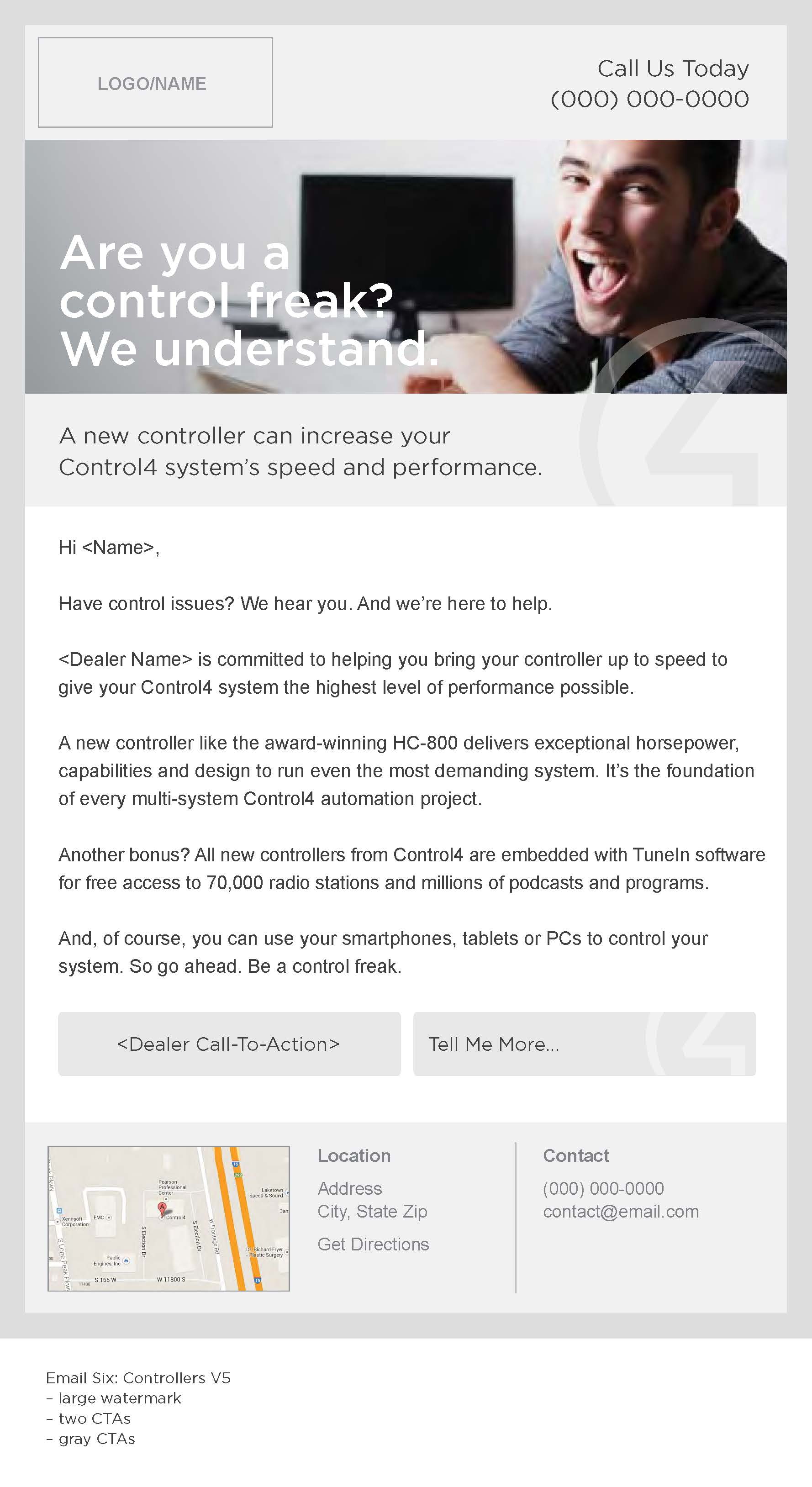
Control4 Dealer Email Series

Control4 contracted me to write a series of emails that dealers could send out their own customer and prospect lists, highlighting different Control4 products and services. Each template will be programmed to populate with each local dealer’s name, contact information and offers. The following emails are part of that series.

Control4 Emails_Page_1

Control4 Emails_Page_2

Control4 Emails_Page_3

Control4 Emails_Page_4

Control4 Emails_Page_5

Email Jeff   

Building a customer retention program for people, dogs and cats.

Banfield Animal Hospitals asked our agency to design and implement a database-driven customer retention program as a test with 100 of its locations nationwide. If successful, it was to roll out to nearly 800 locations.

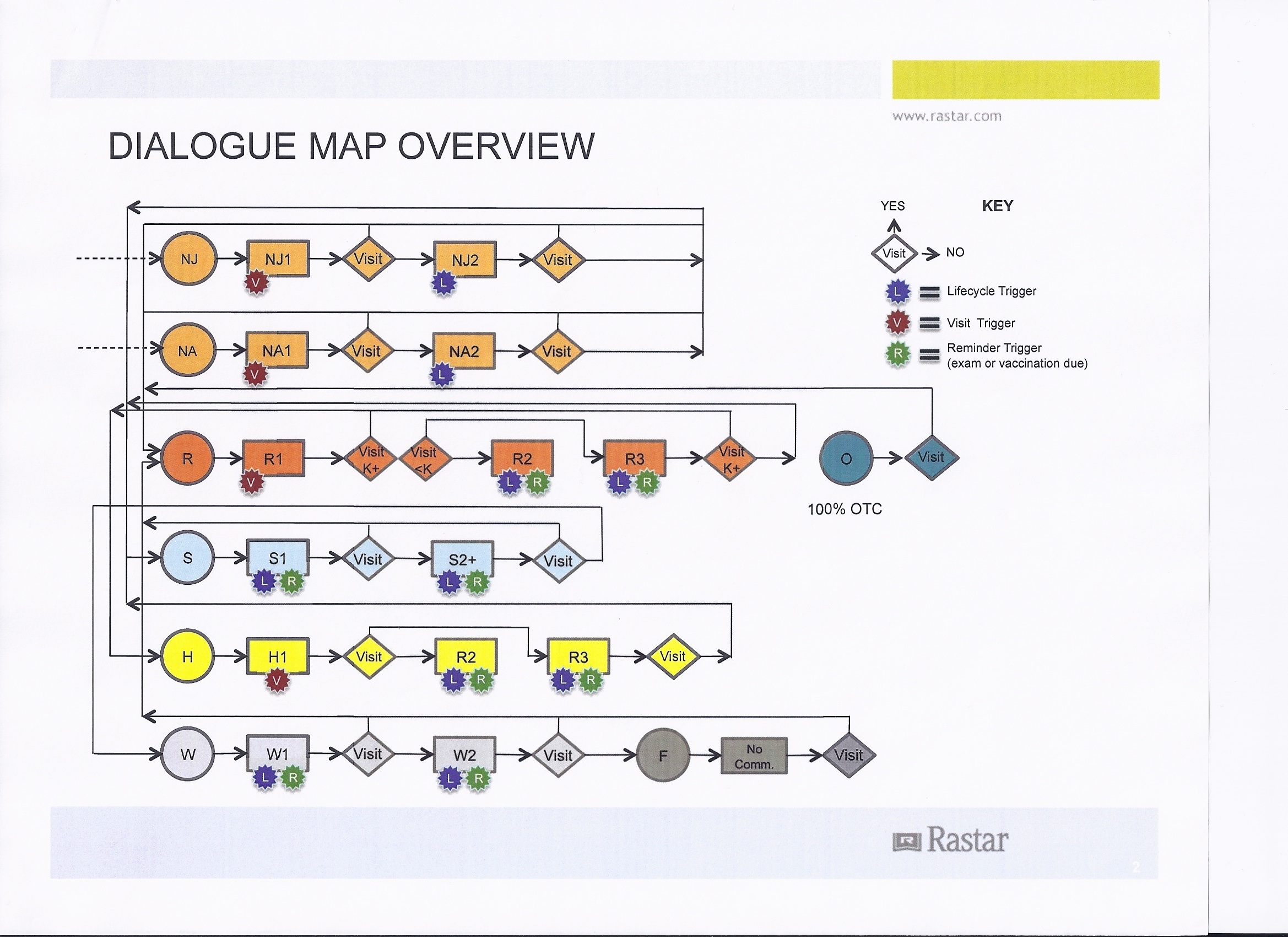
As part of the strategy team, I put together communication flows representing the different customer segments and proposed automation. Segments included New, Rising, High Value, Struggling and Win Back. Pet types of Dog, Puppy, Cat and Kitten were given their own rules as to how they fit into these segments.

Banfield_Comm_Flow

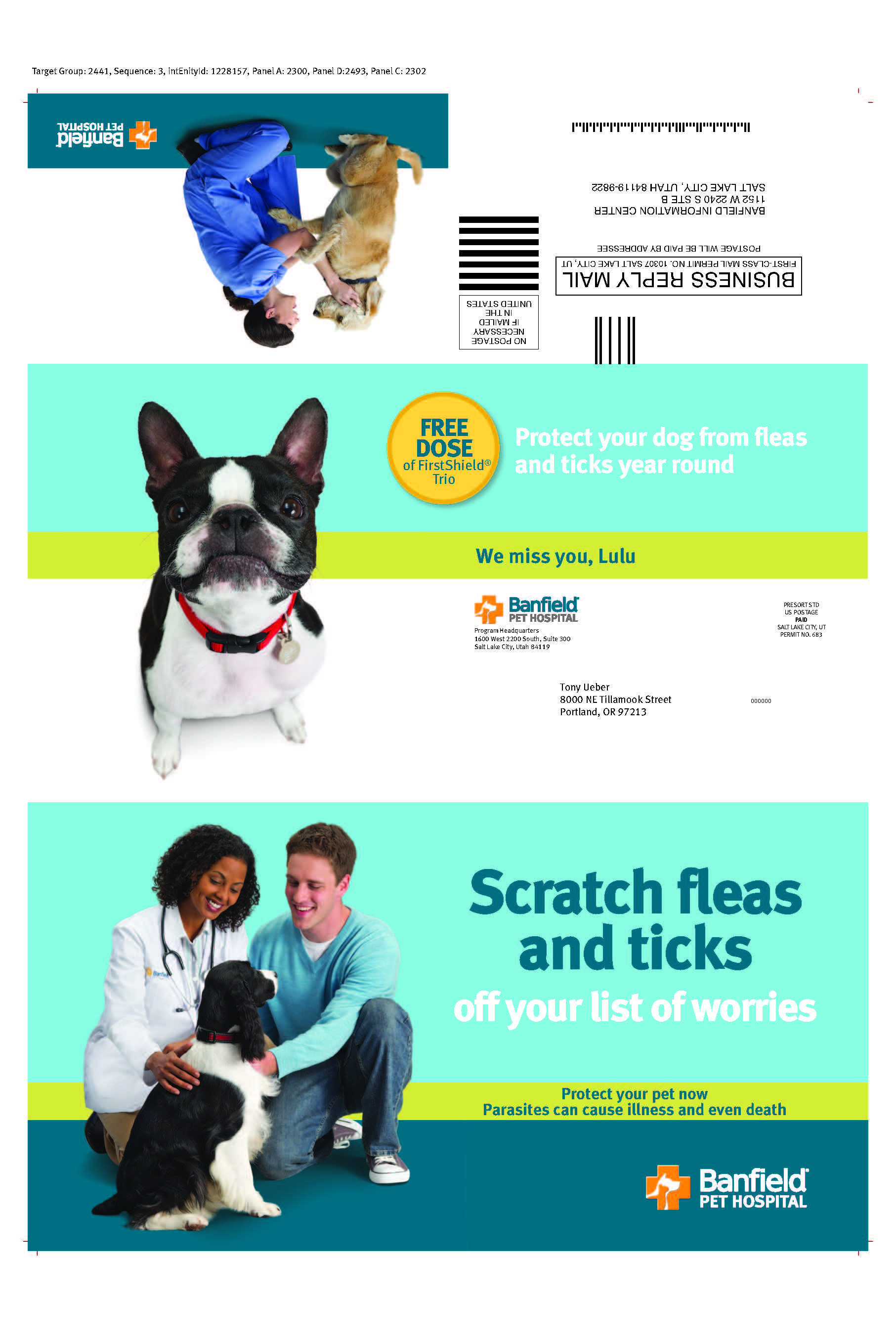
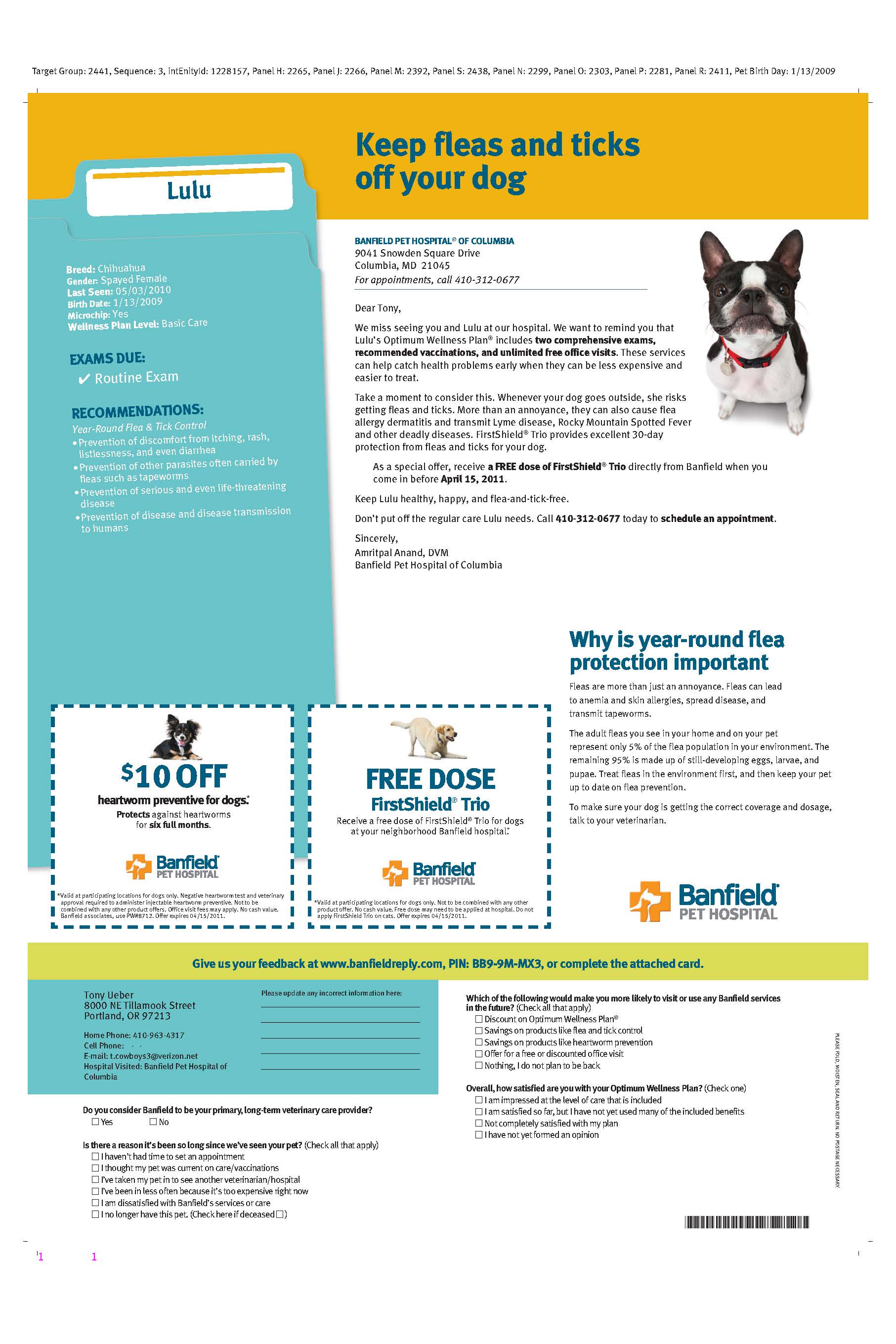
The creative team put together templates for direct mail and email, with almost every text box and image being a variable that would call in images, offers, suggested services, suggested products, tips, etc. based on the data. The number of possible combinations of content numbered in the hundreds of thousands.

Banfield_Variable_Lulu_Page_1

The calculated lift of hospitals using the retention program proved that the program was effective. Plans were put in place to roll out the program to all hospitals.

Banfield_Variable_Lulu_Page_2

Email Jeff